

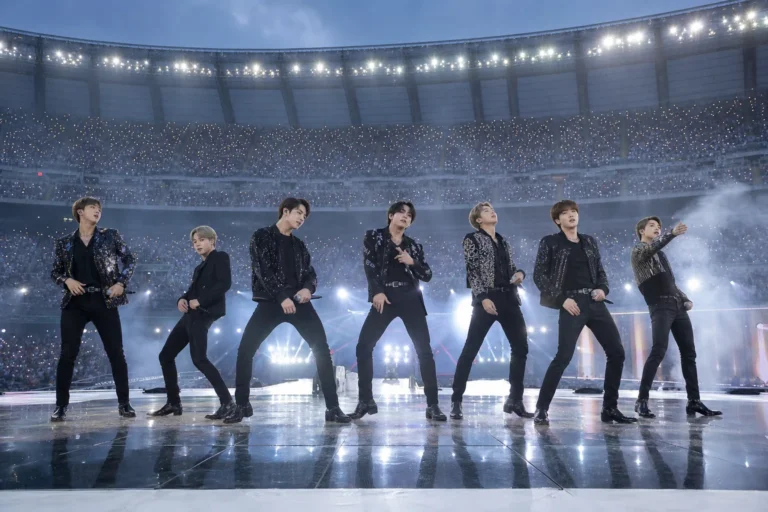
BTS helped make World Cup history on Sunday night, joining a lineup of global pop stars for the tournament final’s first official halftime show and giving K-pop a central role in one of the world’s most watched sporting events.
The performance took place on July 19, 2026, local time, at New York New Jersey Stadium in East Rutherford, where Spain and Argentina met for the World Cup title. When the first half ended and the players left the pitch, the stadium shifted from a football venue into a brightly lit concert setting, marking a new experiment for FIFA after nearly a century of World Cup finals without a Super Bowl-style halftime production.
The show opened with Madonna, whose appearance set the tone for a performance designed around the idea of music as a shared global language. Football icons Ronaldo and Ronaldinho were also incorporated into the staging, linking the spectacle back to the sport even as the event moved decisively into pop-entertainment territory.
BTS Takes The Spotlight
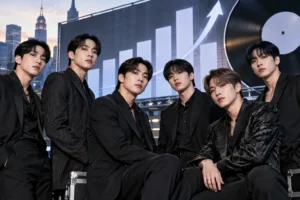
BTS entered after an orchestral segment led by Venezuelan conductor Gustavo Dudamel, performing their Billboard Hot 100 No. 1 hit Dynamite. The seven members appeared in black, red, and white outfits and delivered a compact but high-energy stage that quickly became one of the most discussed moments of the show.
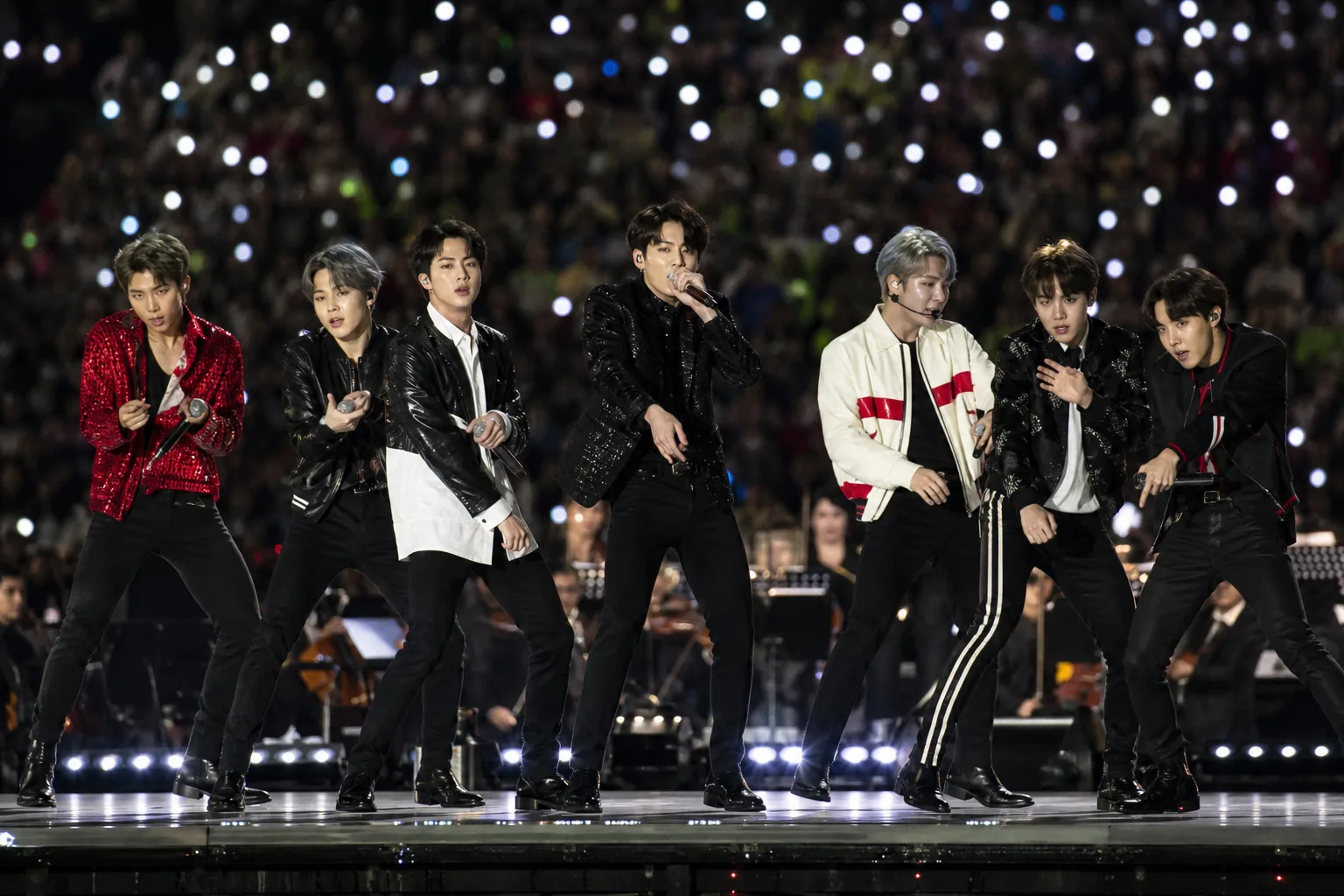
The appearance was especially notable because it came immediately after the group had performed in Paris on its Arirang world tour. Despite the demanding schedule, BTS used the short halftime slot to project the kind of polished stage presence that has made the group a recurring reference point for K-pop’s international expansion.
The group also adapted parts of the performance to the football setting, drawing a loud response from the crowd. For many viewers, the choice of Dynamite carried additional resonance: the song was originally released during the pandemic as a bright, accessible pop track, and its upbeat message fit the broader theme of a halftime show built around unity, gratitude, and global connection.
A Pop Lineup Built For Global Reach
After BTS, Justin Bieber continued the show with a guitar-led performance, while Shakira and Burna Boy appeared for the tournament’s official theme song. The production later shifted into a tribute to Pelé, whose final professional match had taken place near the same New Jersey site in 1977. A children’s choir, Coldplay members, and Sesame Street characters helped close the segment with a message centered on love and togetherness.
Coldplay frontman Chris Martin served as artistic director for the halftime show, assembling a lineup that stretched across generations, regions, and genres. The result was less a conventional concert than a compressed global variety stage, with Madonna representing pop history, BTS carrying the K-pop spotlight, Shakira linking the event to Latin pop and past World Cup music culture, and younger performers broadening the event’s reach.
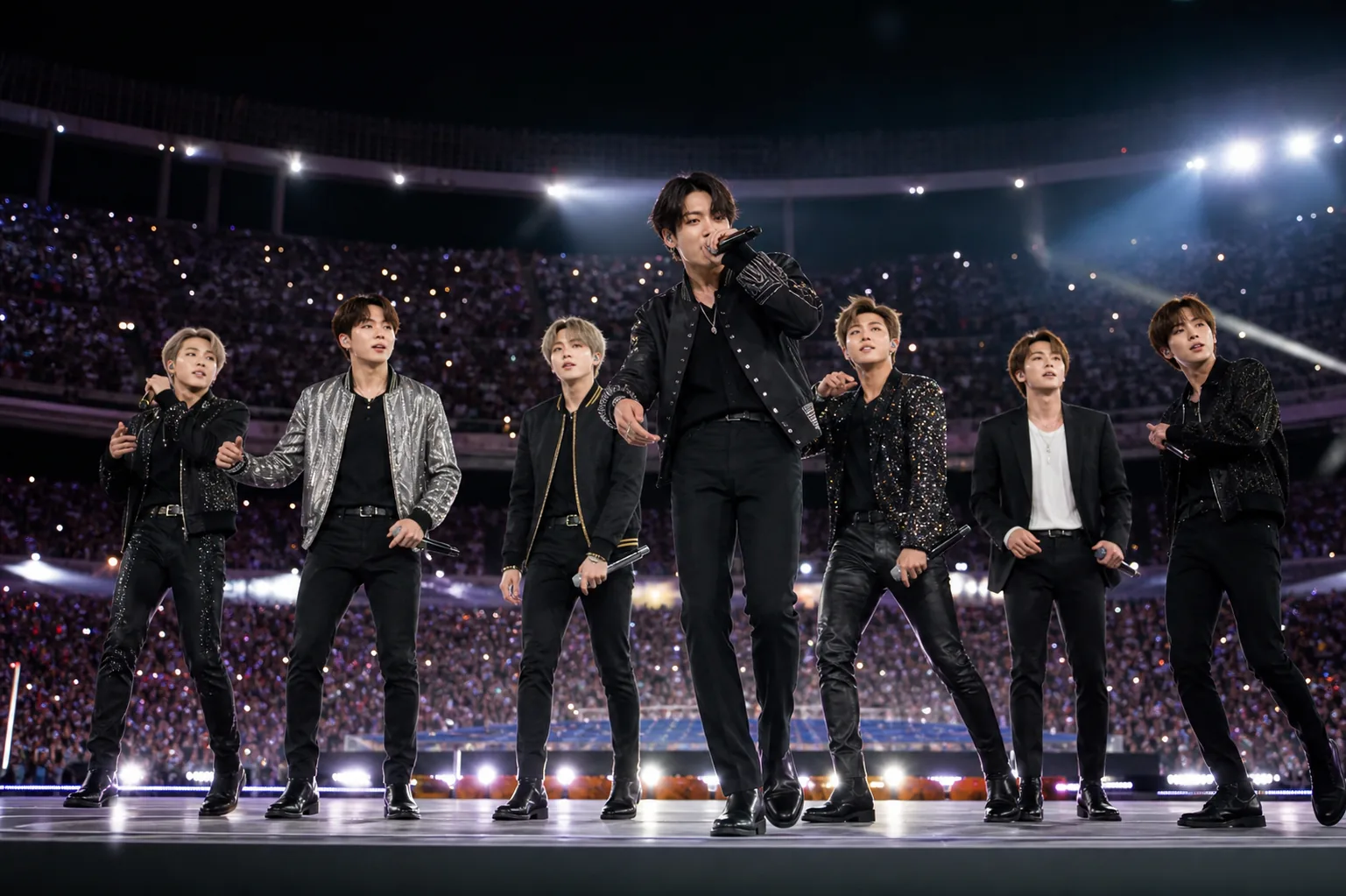
For K-pop, BTS’s presence at the final added another symbolic milestone. The tournament had already included Korean music figures during its opening events, including Blackpink’s Lisa in Los Angeles and Korean singer EJAE in Mexico City. With BTS appearing at the final, Korean pop culture was visible at both ends of the 2026 World Cup calendar.
Milestone And Debate
The halftime concert was also tied to the FIFA Global Citizen Education Fund, which aims to raise money for children’s education and football access programs around the world. FIFA has described the effort as a large-scale charitable initiative connected to education activities in more than 200 countries and its school football programs.
Still, the debut of a World Cup halftime show has drawn debate. Supporters see it as a way to broaden the final’s cultural footprint and bring new audiences into the event. Critics argue that extending halftime to roughly 27 minutes risks shifting attention from the players and adds to concerns about commercialization around the tournament.
That tension is likely to remain part of the conversation. The World Cup final has traditionally been framed as a football-first occasion, and changing its rhythm with a major music production is a significant departure from precedent. Yet the reaction to BTS and the rest of the lineup suggests that FIFA’s experiment achieved one of its clearest goals: making the final a simultaneous sports, music, and media event.
For BTS, the performance continued a World Cup connection that includes Jungkook’s 2022 Qatar opening ceremony stage for Dreamers. Four years later, the full group returned on an even larger symbolic platform, standing at the center of a halftime show that may shape how future World Cup finals are staged.

Join the Conversation
Log in to share your thoughts and join the conversation with other fans.