
K-pop’s FANOMENON Festival Plans Fan Awards and Major 2027 Culture Push


South Korea is preparing a major new K-pop and K-culture event built around one of the industry’s most powerful forces: fandom. The project, called FANOMENON, is scheduled to debut in December 2027 with concerts, fan-centered awards, exhibitions, and culture programs across Seoul and Goyang.
The name combines fan and phenomenon, reflecting a plan to treat fans not simply as consumers of K-pop but as active participants in the global growth of Korean popular culture. The event is being framed as both an entertainment gathering and a tourism project, aiming to bring large numbers of overseas visitors to Korea during the year-end season.
Current plans call for the first edition to run from December 2 to 12, 2027. The opening event is expected on December 2, followed by the main program from December 3 through December 12. Seoul Arena in Changdong is being lined up for major concerts and the awards ceremony, while KINTEX in Goyang is expected to host music festival programming, exhibitions, and hands-on K-culture experiences.
Awards Designed Around Fans
The most distinctive part of FANOMENON is its proposed fan awards. Instead of treating fandoms as background noise around artist achievements, the event plans to recognize the fandoms themselves. Artists would receive awards on behalf of their fans, turning the usual awards-show format around and making fan participation the headline idea.
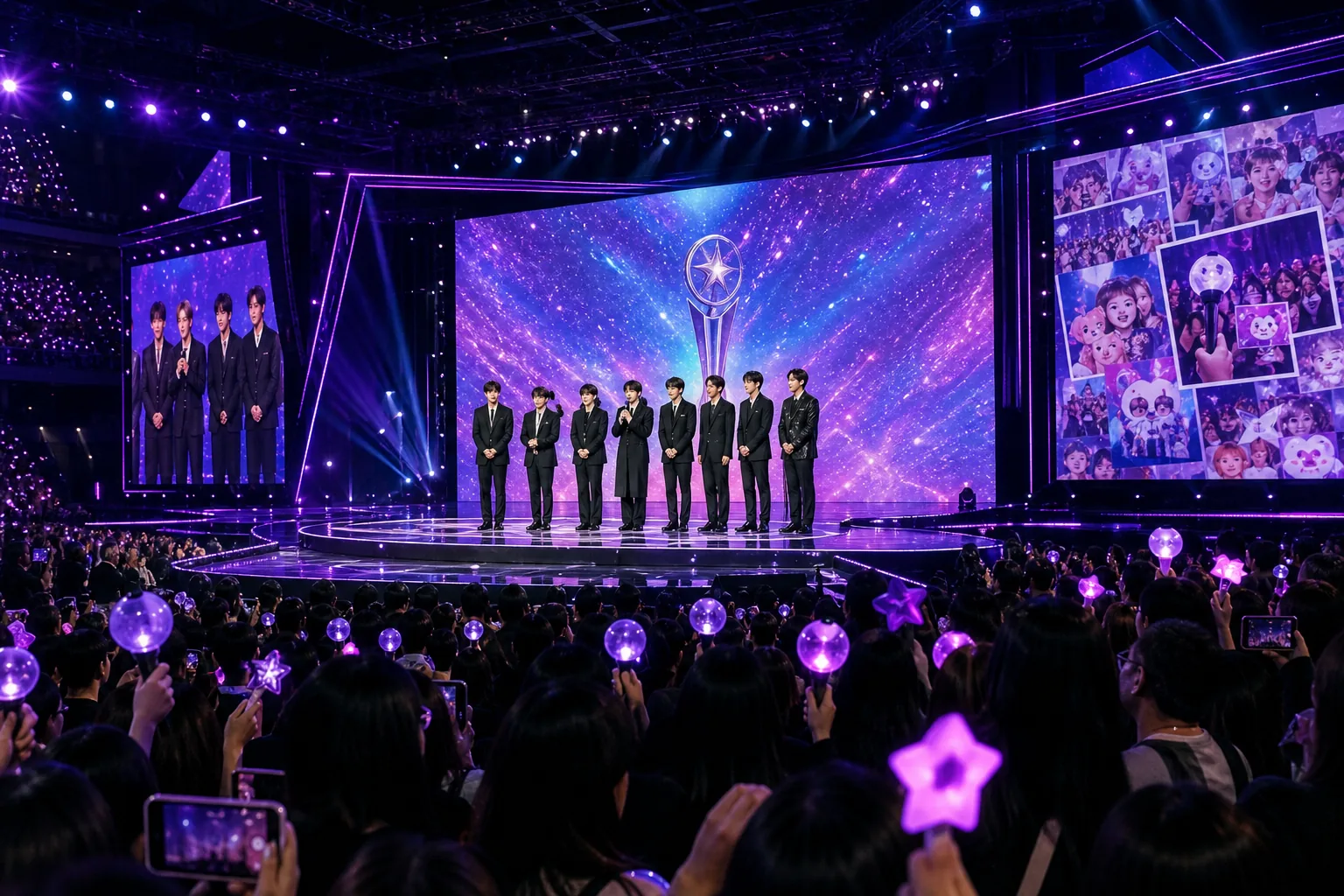
The selection system is expected to analyze which fandoms showed the strongest activity and impact during the year, with a top 10 list among the concepts under discussion. That approach suggests the awards could focus not only on music sales or chart performance, but also on the measurable ways fans organize, promote, attend, and sustain K-pop communities around the world.
The format is also notable because it arrives at a time when K-pop companies increasingly rely on direct fan platforms, global tours, merchandise ecosystems, fan meetings, and online community activity. By building an event around fandom power, FANOMENON is trying to formalize something that already shapes the business: fan communities are now central infrastructure for Korean entertainment.
Big Agencies and a Wider K-culture Agenda
The project is being developed with cooperation involving Korea’s four major K-pop companies: HYBE, SM Entertainment, JYP Entertainment, and YG Entertainment. A joint business structure is reportedly being pursued, which would allow the companies to coordinate artists, schedules, production, and commercial strategy for a large recurring event.
That cooperation is important because a festival of this scale depends on artist availability. K-pop tours, comeback promotions, award shows, and global schedules are planned far in advance, and aligning multiple agencies requires more than a one-off invitation list. If the event succeeds, it could become a fixed annual destination on the global K-pop calendar.
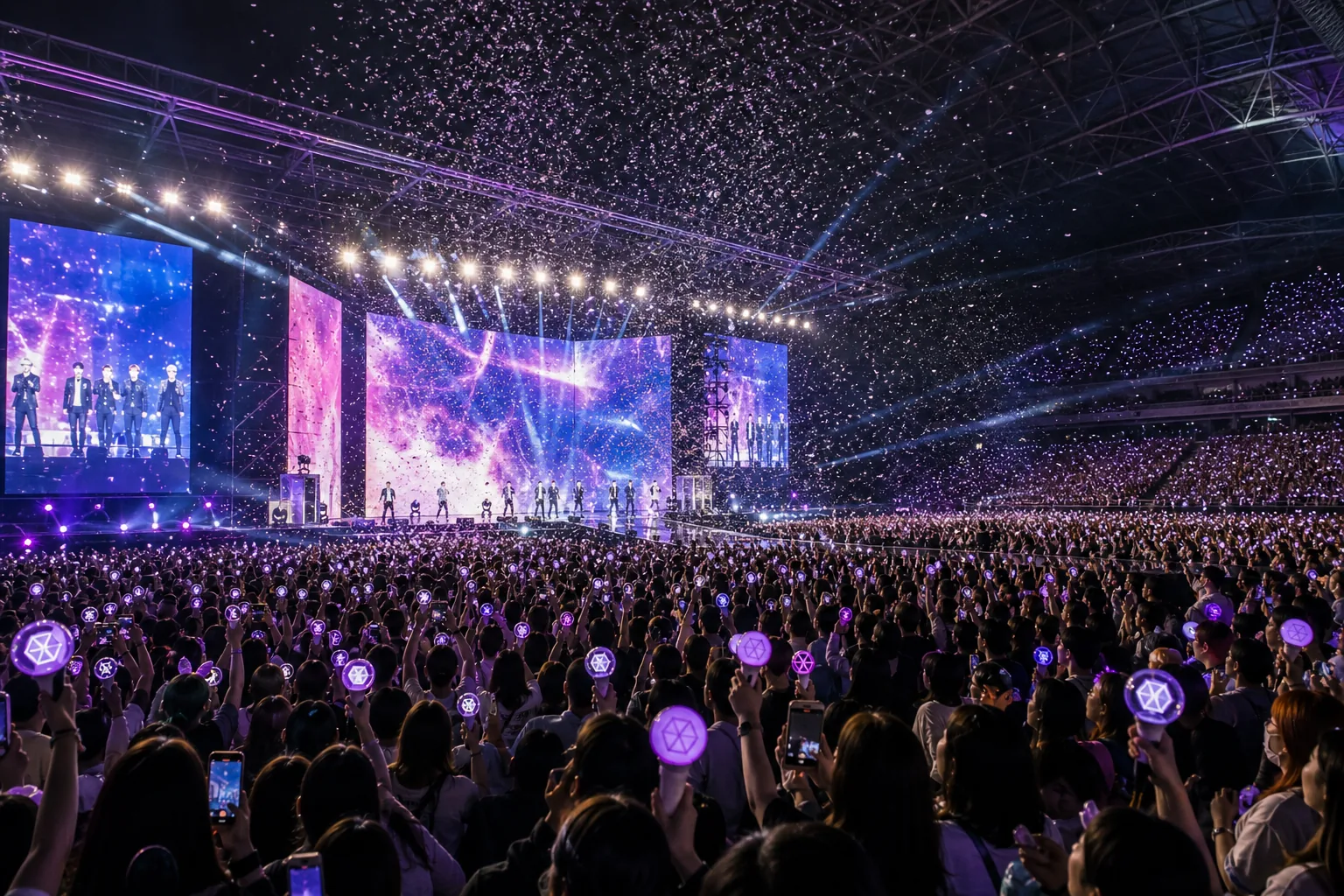
FANOMENON is also being designed as more than a concert series. The KINTEX portion is expected to include K-culture companies across sectors such as food, beauty, fashion, webtoons, film, drama, animation, and other content businesses. The goal is to turn the festival into a gateway for visitors who come for music but also encounter the broader culture industry surrounding K-pop.
Economic expectations are ambitious. Research cited in the project planning points to a possible total attendance of about 520,000 visitors, including roughly 200,000 foreign tourists, and a potential economic impact near 1 trillion won. Those figures underline why the event is being discussed not only as entertainment news but as part of Korea’s cultural export and tourism strategy.
The Infrastructure Question
The plan also highlights a long-running challenge for Korea’s live music market: venue capacity. K-pop has become one of the world’s most visible music exports, but Korea still has relatively few venues suitable for the largest international-scale pop productions. Seoul Arena, expected to open before the first FANOMENON, is central to the event’s feasibility.
The comparison often raised is Coachella, the U.S. festival that combines music, fashion, food, brand activations, and destination tourism. FANOMENON is not simply trying to copy that model; its core identity is different because it centers K-pop fandom and Korean cultural industries. Still, the comparison shows the scale of the ambition and the pressure on Korea to build festival infrastructure that matches the global reach of its artists.
If FANOMENON can secure top-tier lineups, manage cross-agency cooperation, and deliver a smooth visitor experience across concerts and exhibitions, it could become a new kind of year-end K-pop gathering. Its success will depend on whether organizers can turn fan enthusiasm into a sustainable event model without losing the community spirit that made K-pop fandom globally influential in the first place.


Join the Conversation
Log in to share your thoughts and join the conversation with other fans.